Know the plan. Recommend the right lens.Quote it before they stand up.
Tools that make the plan legible and the sale simple, on every computer in the optical — so more patients leave with better vision from your practice, not from a website. The copay calculator and the visual library today; the plan reference next.
See yours in thirty seconds
Optical pays for the practice.The desk that runs it works from memory.
Half a practice's revenue is the optical, a third of the prescriptions it writes get filled somewhere else, and the person at the bench is the hardest hire in the building. What holds it together is what that person carries in their head: which plan allows what, where the lab portal is, what to say when the copay surprises somebody. That is not a system. It is one resignation from being nothing.
- 54%
- of an independent optometry practice's gross revenue came from product sales in 2019 — eyewear alone was 37%, against 21% from exams
- ABB Analyze and CareCredit report
- 65%
- of patients handed an eyeglass prescription fill it at the practice that wrote it, on average, where the practice has its own optical — the rest buy elsewhere
- VisionWatch figure, as cited in the trade press
- 36%
- of eyecare providers reported a severe or extreme shortage of opticians; six in ten reported at least a moderate shortage of qualified staff
- The Vision Council reports
Research about the problem, not results from this product. The evidence page says which is which.
What your opticians get instead
Set up once, on every machine in the dispensary. No install, and nothing for staff to remember to open.
In the optical
Quote the job while they are still sitting there
It reads the plan, applies the allowance, and prices each coating as it goes on — including the UV that anti-reflective forces on. What the patient hears is what the lab bills.
No quote anybody has to walk back, whoever is on that day.
Next
Know the plan before they ask
The plan reference: what each plan allows, how often, and what it quietly forces, beside the calculator. In build now, seeded from the plans your bench quotes most.
A new optician answers the allowance question on day one.
One job, three decisions
What happens while the patient is still sitting there
A single-vision job on a $220 frame, priced one decision at a time. Every figure computed from the shipped price sheet.
01 / 03
The authorization, not somebody's memory
The optician picks the plan; the calculator applies what it allows. On a $220 frame the allowance does its own arithmetic.
- Seven plan families
- Employer groups
- Frame allowance applied
- Frame at retail
- $220
- Plan allowance
- −$150
- 20% off the rest
- −$14
02 / 03
The material is priced as it is chosen
Polycarbonate, Trivex, the hi-index tiers. The copay appears with the material, so the thinner-lens conversation has its number already on screen.
- Material copays
- Single vision and multifocal
- Per-plan
- Polycarbonate
- $35
- Frame at retail
- $220
- Plan allowance
- −$150
- 20% off the rest
- −$14
03 / 03
What they hear is what the invoice says
Anti-reflective forces UV on the VSP plans; the engine adds it and the quote shows the line. Then one total, out loud, while the patient is still there — the same arithmetic the lab bills against.
- Forced add-ons shown
- AR, photochromic and polarized
- Nothing about the patient stored
- Polycarbonate
- $35
- Anti-reflective
- $85
- UV
- $10
- Frame at retail
- $220
- Plan allowance
- −$150
- 20% off the rest
- −$14
The visual library
Show them what they are paying for
13 figures for the bench, drawn for a patient rather than a textbook. Staff turn the screen around instead of drawing on an envelope.
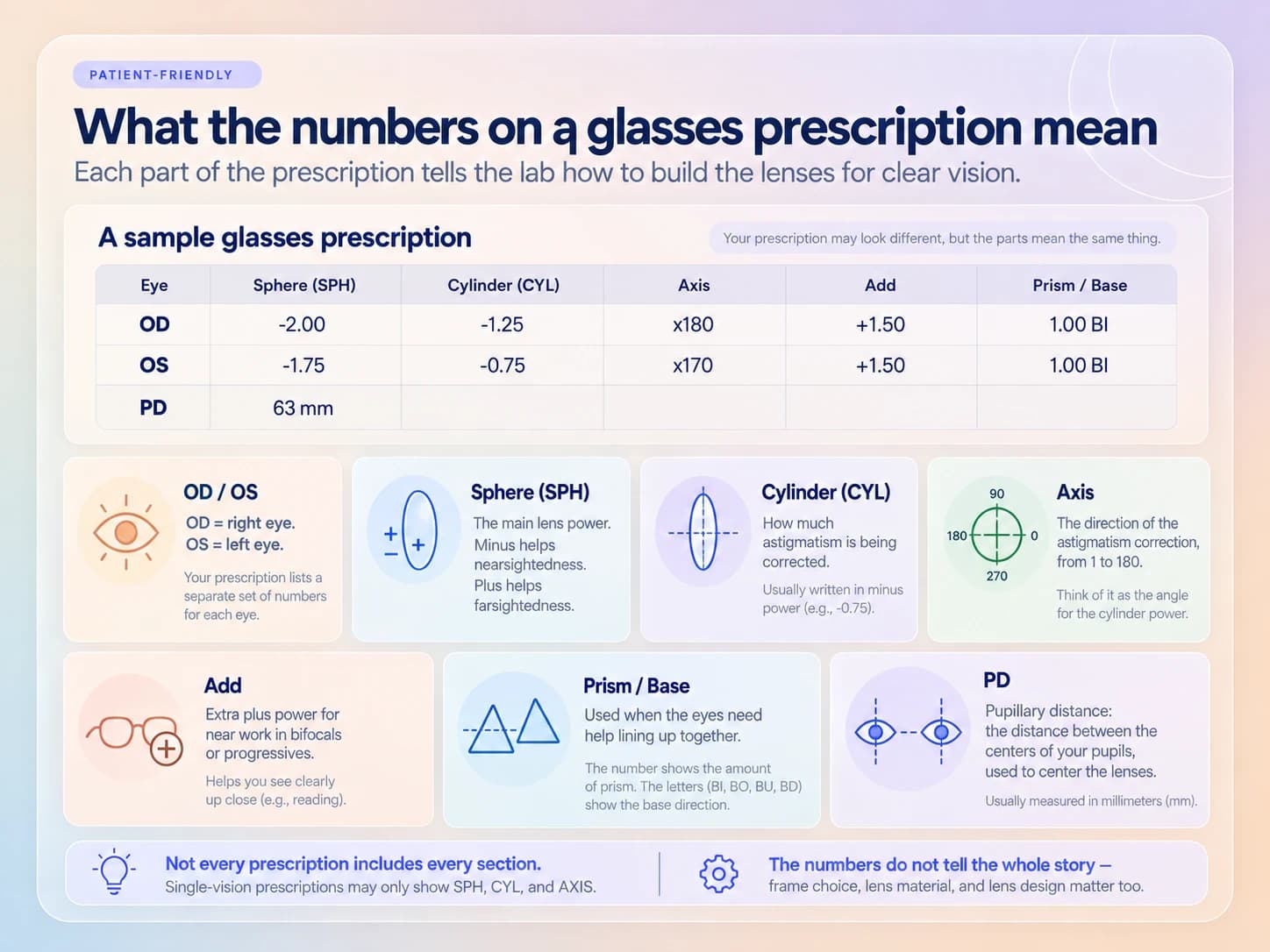
What the prescription numbers mean 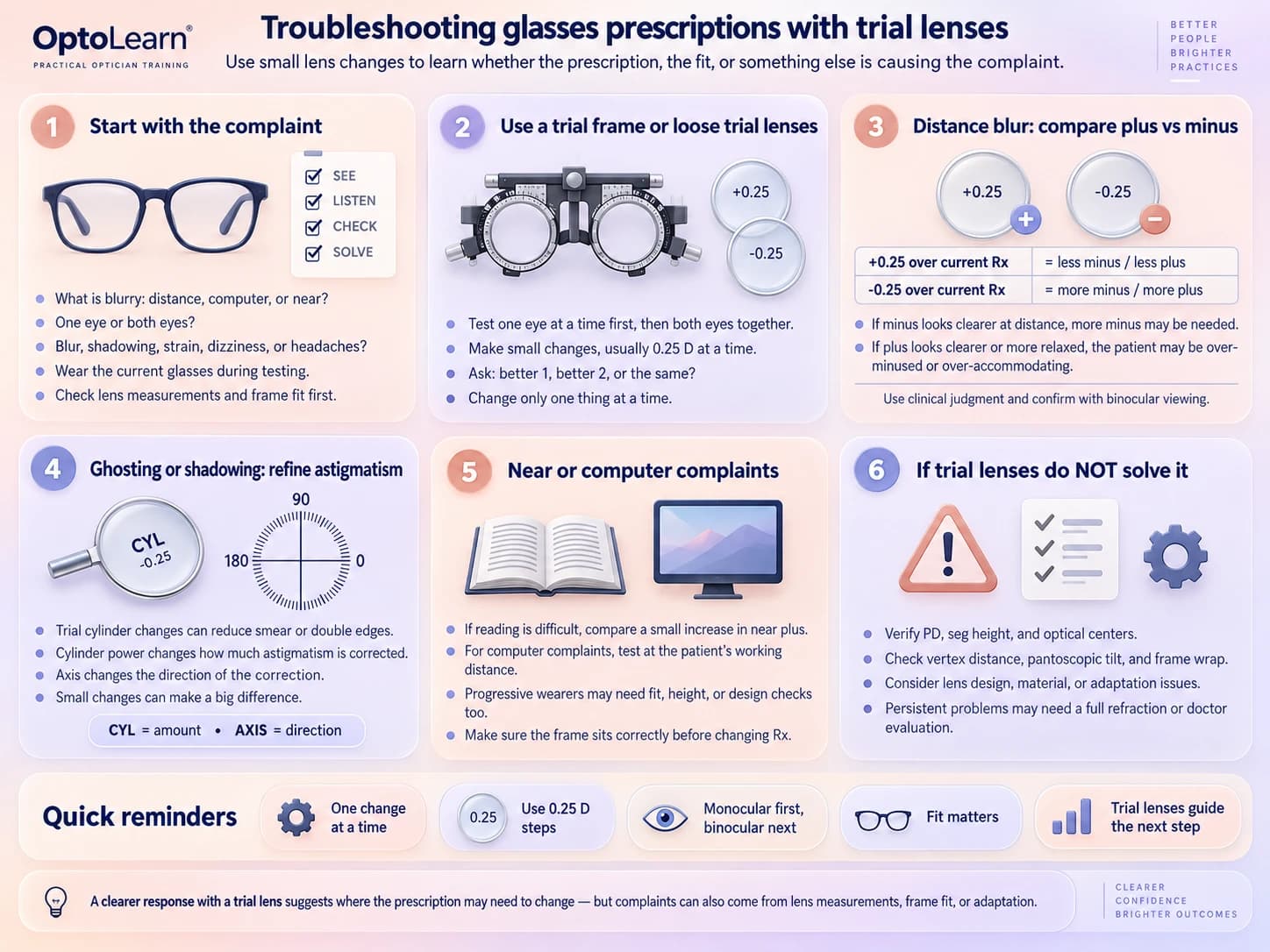
Troubleshooting a prescription with trial lenses 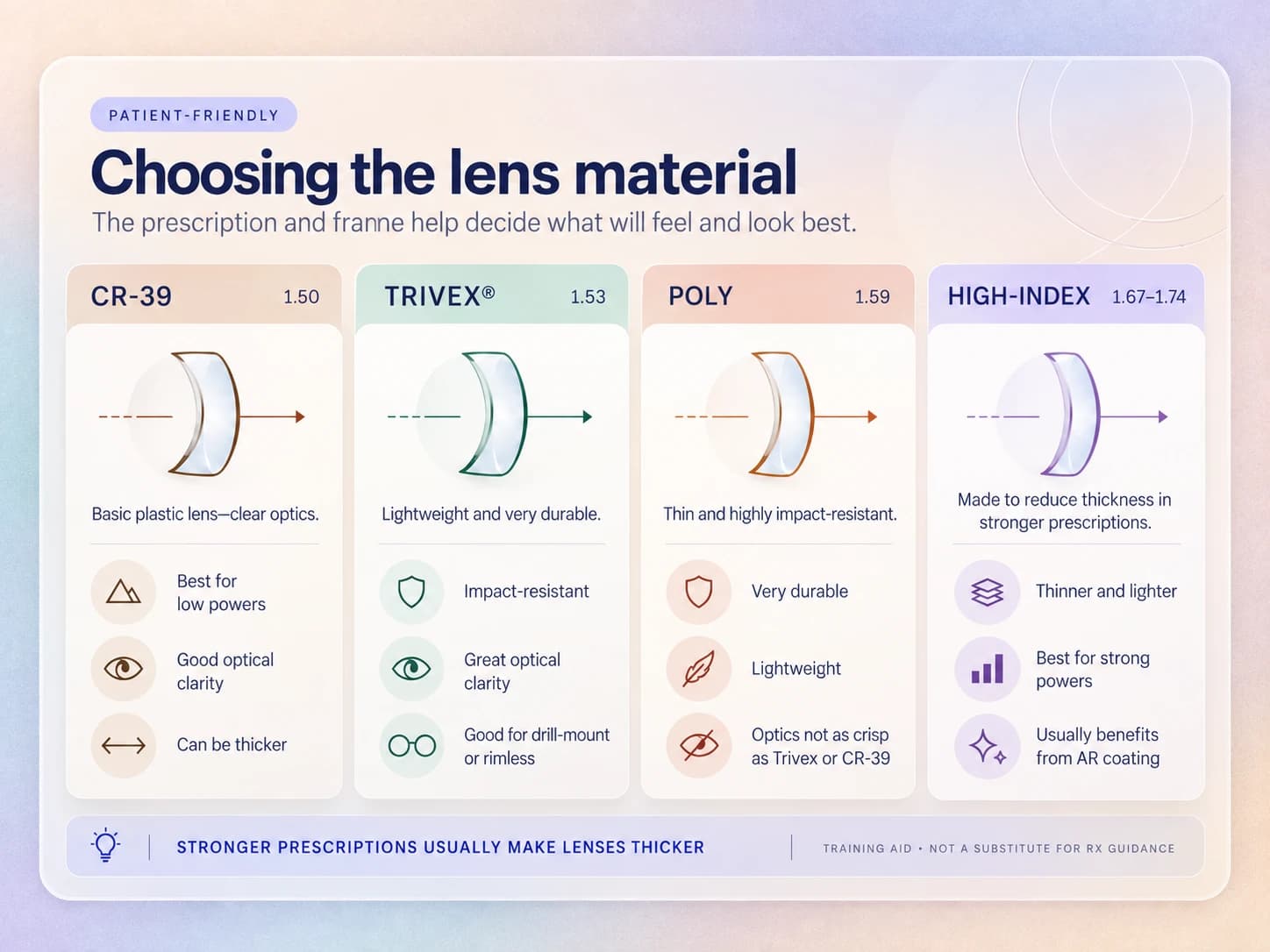
Choosing the lens material 
What premium progressives add 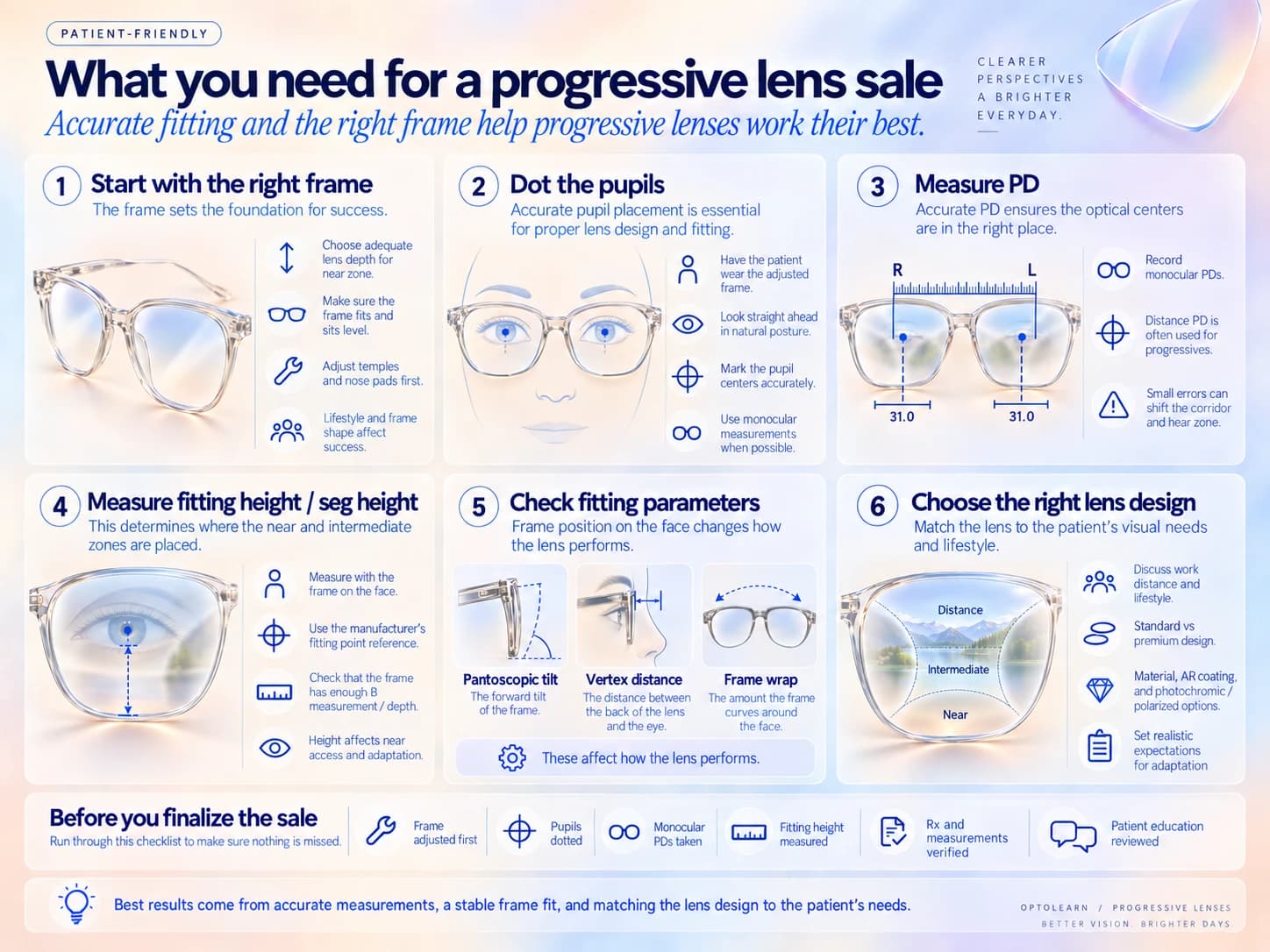
What a progressive lens sale needs 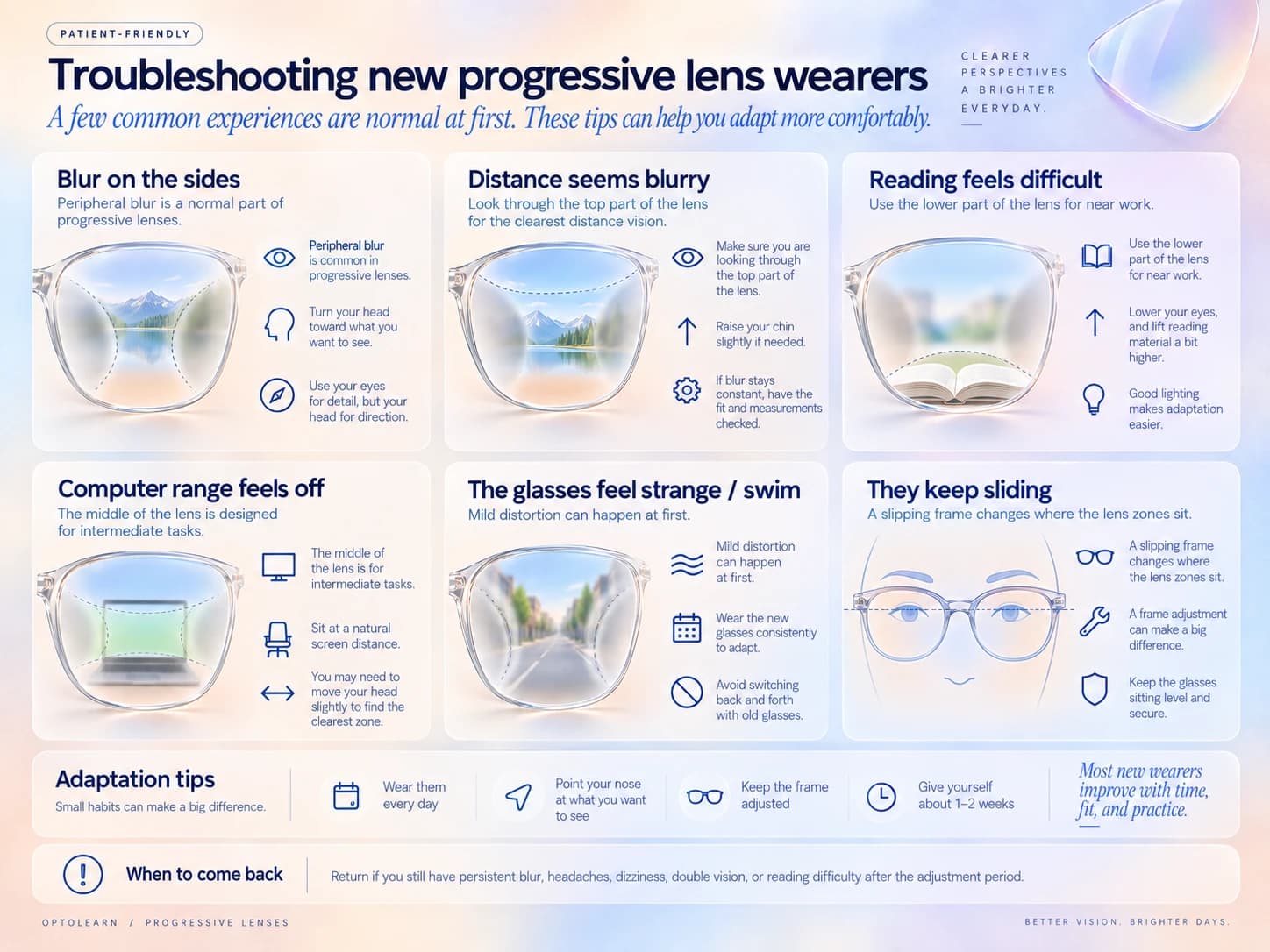
Getting used to new progressives
Yours opens with all 13, searchable by the brand on the box or the words the patient used.
In build
Four simulators for the bench
On the same price sheet the calculator runs on, so staff practice against your plans and your copays. None is running yet, and a pilot practice gets a say in the order.
- Lens materials and thickness
- Coatings and treatments
- Progressive selection and measurements
- Quoting the job against the plan
Including the preliminary-testing modules, which are live now.
While you are here
The rest of the practice gets the page too
Every system your staff sign into, on one page on every machine, instead of a bookmark folder only its author can navigate. Three preliminary-testing modules are live for technicians underneath it.
Your practice
Good morning
Tools
Your links, from your site
Training, for a slow afternoon.
Early access
Your next hire starts on a Monday
Paste your website and see the page they will open to — your systems, your tools, your colors. Ask for your practice's place in the next batch from there.